Car Wash Event Installation
Construction of a kinetic event installation with custom-developed drive mechanics as a brand experience.
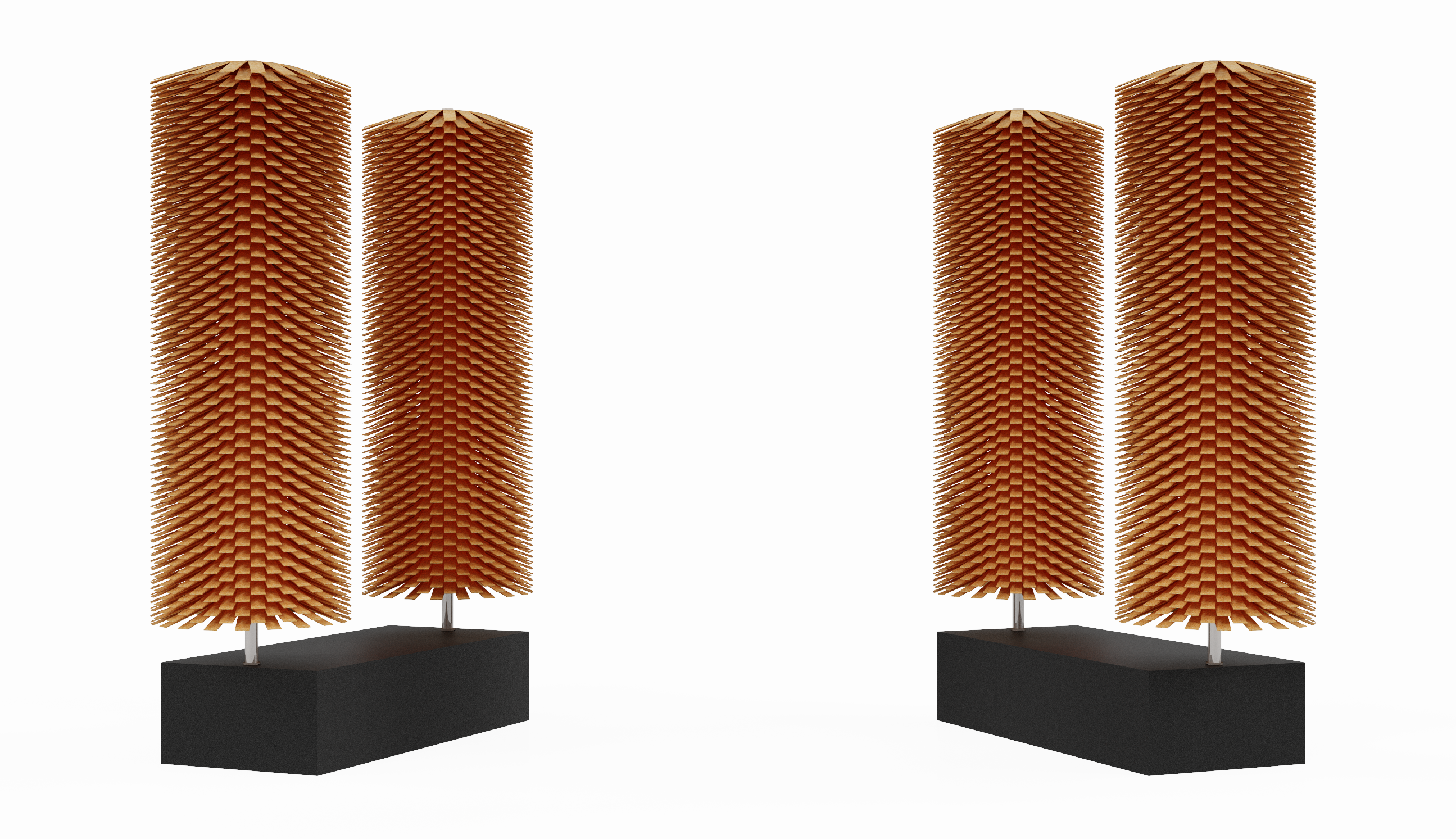
Construction and implementation of a walkable car wash installation as part of a marketing event in a parking garage. The installation guides visitors through on carts, past rotating brushes — a kinetic prop with custom-developed mechanics, drive system, and 3D-printed components.
Challenge: Visually convincing rotating brush installation for a one-time live deployment, with no ready-made solution on the market and a tight timeline
Solution: Custom-developed brushes made from microfiber material, driven by an electric motor with frequency converter and belt transmission, custom belt pulleys from 3D printing
Result: Functional, smoothly running installation as the central experience element of the event, built on schedule and deployed in live operation
Project Info
- Services: Concept, design, mechanical development, drive engineering, 3D printing, assembly and commissioning
- Domain: Event installation · Special construction · Mechanical design
- Industry: Brand experience · Brand activation · Event technology
- Project type: One-off · Temporary installation
Background
As part of a marketing event in a parking garage, visitors were to be immersed in a staged experience immediately upon arrival. Access to the event space was via upper floors, with the route there deliberately designed as part of the concept.
The central element was a car wash installation through which visitors would be guided on carts. The installation had to be visually aligned with the branding, show convincing brush movement, and operate reliably in live deployment — with no opportunity for extended on-site testing.
Requirements
Several constraints shaped the implementation:
- Short planning and realization time
- One-time live deployment, without a test phase
- Realistically appearing, controlled brush movement
- Robust execution for multi-hour operation
- Fast setup and integration into the venue
- Combination of design requirement and functioning mechanics
My Role
- Concept and mechanical design of the brush units
- Design of assemblies, shafts, and bearings
- Selection of motor, frequency converter, and drive components
- Drive force transmission and gear ratio design
- Design and 3D printing of project-specific components
- On-site assembly and commissioning
Construction & Execution
The installation consists of multiple brush units arranged in pairs, flanking the passage area on both sides. Each unit comprises two rotating brushes driven independently. The support structure was built from theatre battens as a quickly available and stable substructure — a material proven in event construction that allows fast adjustments.
Since no suitable off-the-shelf brushes were available, they were developed entirely from scratch: microfiber material cut into strips and attached to a central shaft, designed for visually convincing movement and sufficient rigidity in operation. The material choice arose from the requirement for fast manufacturability combined with convincing visual appearance.
The brushes are driven by electric motors with frequency converter, enabling flexible speed control. Power transmission runs via a belt drive with additional gear reduction to match speed and torque to the brush shafts. Stable bearing blocks support the shafts so that rotation remains smooth and controlled.
The connection between motor and shaft uses custom-designed belt pulleys from 3D printing (material: ABS). They are precisely matched to the requirements — mounting elements, shaft dimensions, and belt geometry are integrated directly into the print geometry. The use of additive manufacturing was critical here because components could be designed, iteratively adjusted, and directly installed during setup within a short timeframe.
Results
- Functional, smoothly running installation in live deployment
- On-schedule setup despite tight timeline
- Visual highlight as a defining element of the visitor journey
- Robust operation throughout the entire event duration without mechanical failures
- Reusable assemblies and drive components for similar follow-up projects
Applicability to Other Projects
This approach — working mechanics under time pressure, using event construction methods and purpose-developed special parts — can be applied to many areas of brand installations and temporary constructions:
- Kinetic installations for brand experiences — moving elements used as staging or interactive highlights in brand events, from arrival experiences to central showpieces.
- Special constructions with custom drive technology — when no ready-made solution exists on the market and the mechanics must be specifically designed for the application (drive, transmission, bearings, safety).
- Fast realization under event conditions — constructions that must go from concept to live deployment quickly, with clear setup planning and reliable components.
- 3D printing as a bridge between concept and hardware — project-specific components such as belt pulleys, brackets, adapters, or connectors available in hours rather than weeks.
- Combination of design ambition and function — installations where both visual impact and technical reliability matter, not one at the expense of the other.
If you are planning a kinetic installation, an interactive showpiece, or an unusual construction for an event or brand activation — let’s talk.
Similar requirements or your own idea?
I support with concept, engineering, and realization.