Smart Postmix System
Concept and design development of a connected postmix dispenser with touchscreen interface — pitched to the client.
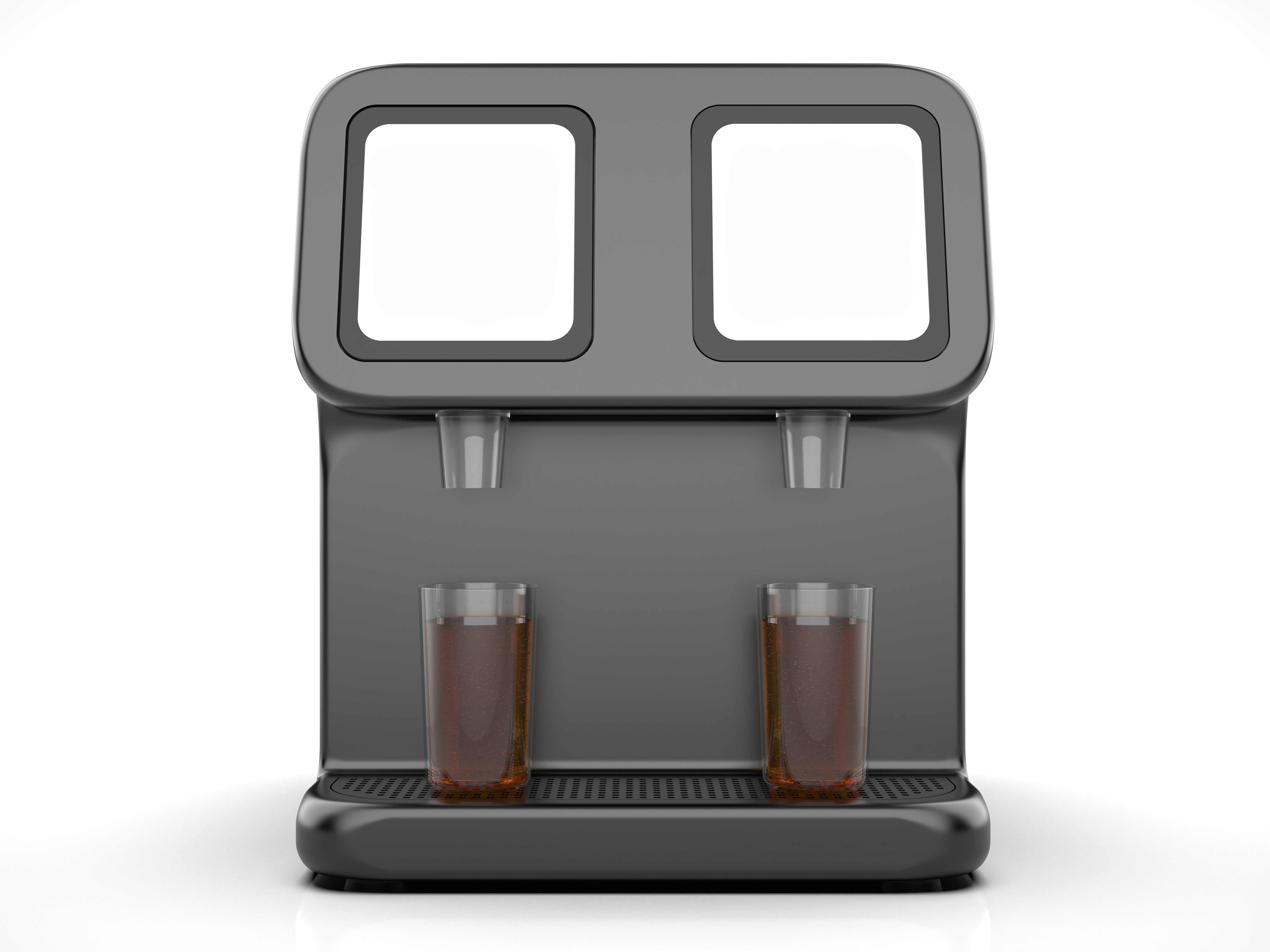
Concept and design development of a modern, connected dispenser as the foundation for a new product family in the gastronomy and event sector. The concept was developed on behalf of a client, pitched to them, and forms the basis of a planned product development. It combines classic postmix technology with touch interface, IoT functions, data integration, and consistent product design — conceived as an interface and experience product, not a pure technical device.
Challenge: Classic postmix dispensers are technically functional but poorly integrated — operation, maintenance, and monitoring run separately and are heavily dependent on staff
Solution: Holistic system concept combining product design, touch interface, dashboard, and IoT connectivity — complexity stays in the background, operation becomes reduced and self-explanatory
Result: Concept for a new generation of connected dispensers with clearly differentiated product identity, integrated UX concept, and connectivity to digital operating processes
Project Info
- Services: Market analysis, concept development, product design, system architecture, feature definition, UX concept, UI design
- Domain: Product development · Industrial design · Smart systems
- Industry: Gastronomy · Beverage · Event
- Project type: Client work · Concept development · Pitch
Background
Existing postmix systems on the market have grown over decades: technically reliable, but conceived primarily as pure functional devices. Operation, maintenance, and monitoring typically run through separate channels — staff know the machine from experience, fill levels are checked manually, faults often only appear during use. A consistent digital connection to POS systems, ordering processes, or service workflows is missing from most market solutions.
On behalf of the client, I developed a complete concept for a new product family that closes this gap: a dispenser that not only works technically, but presents itself as a connected product with clear design language and integrated operating logic — meeting the expectations that operators and users today have of digital products. The concept was pitched to the client and forms the basis of a product development planned for the coming years.
Concept Goals
- Intuitive, self-explanatory operation at the device
- Consistently high drink quality through automation
- Live monitoring of consumption, fill levels, and status
- Predictive maintenance instead of reactive fault response
- Extensibility through interfaces to existing operating systems
- Modern product design that clearly stands apart from market standards
My Role
- Market analysis and evaluation of existing systems
- Development of the overall concept (hardware, software, UX, ecosystem)
- Product design and design language
- Definition of smart features and data functions
- UI concept for touch display and dashboard
- System architecture and interface concept
Product Design
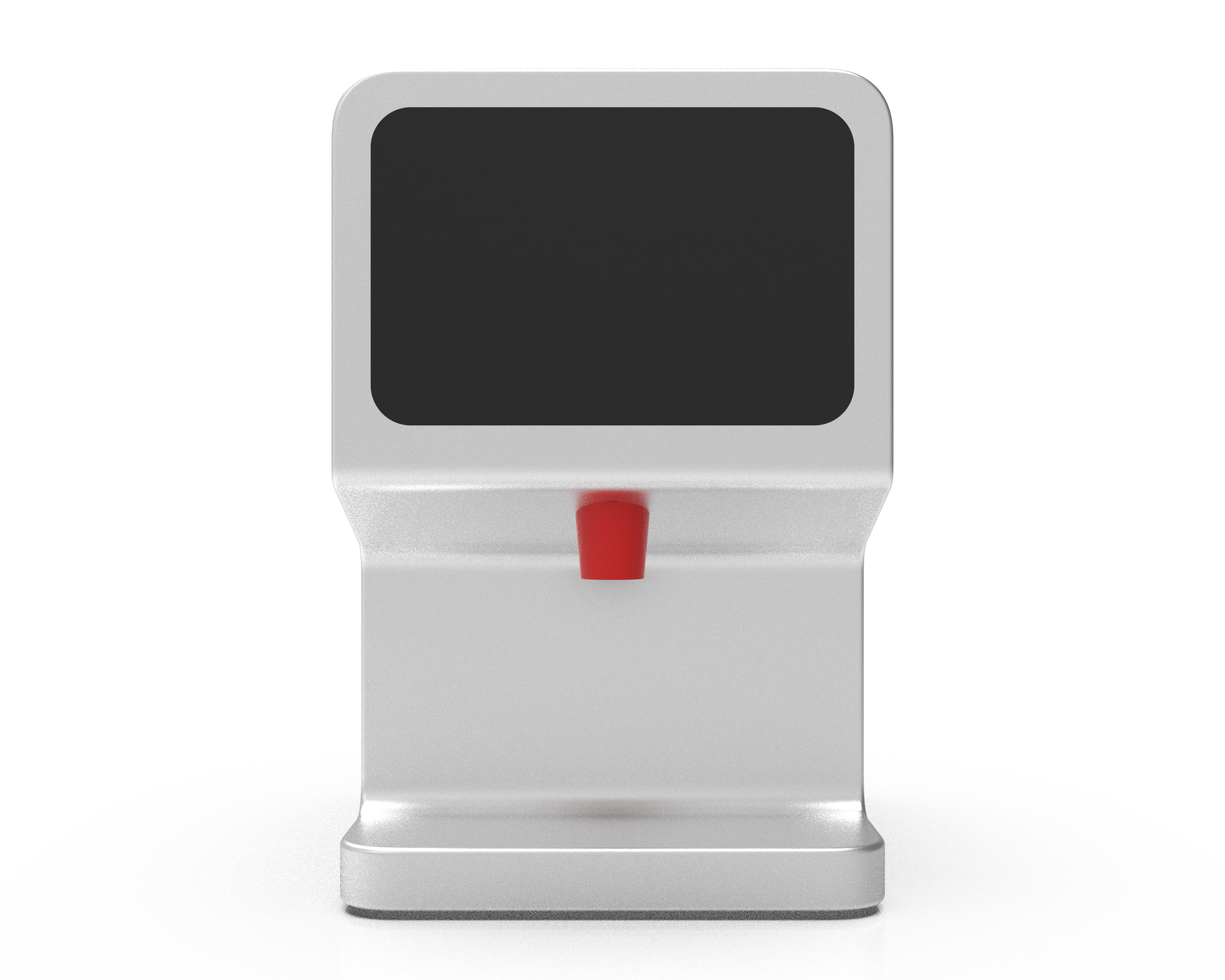
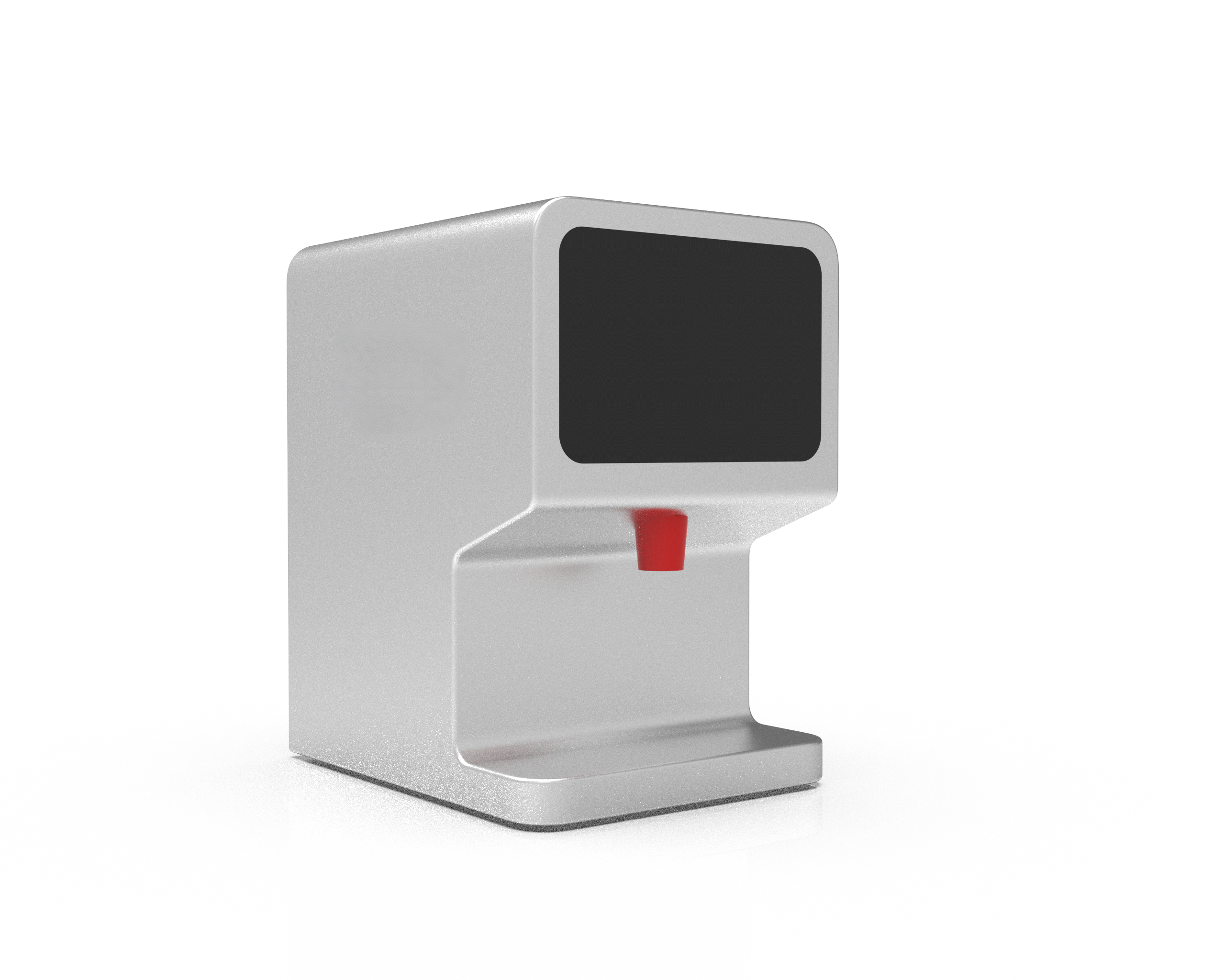
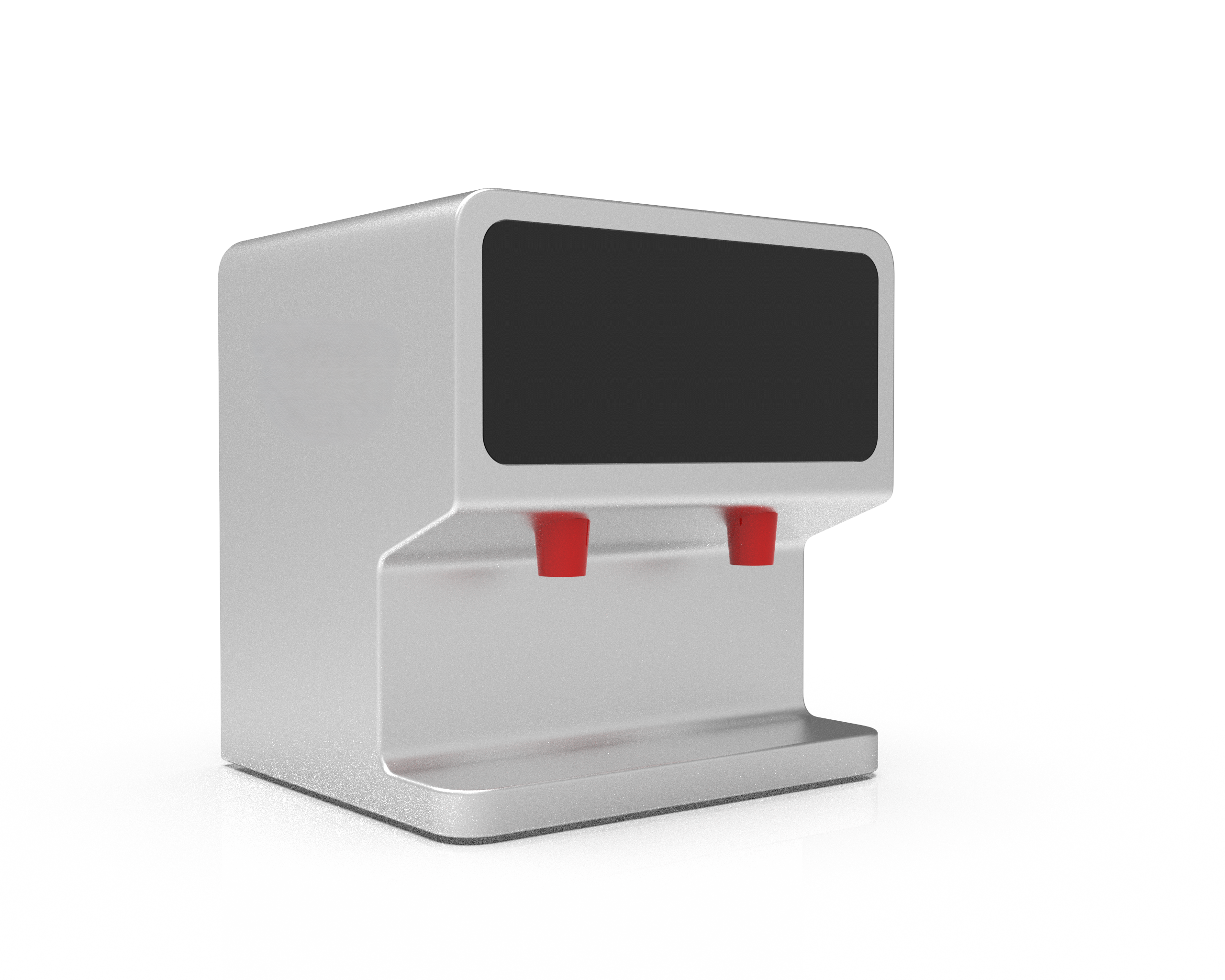
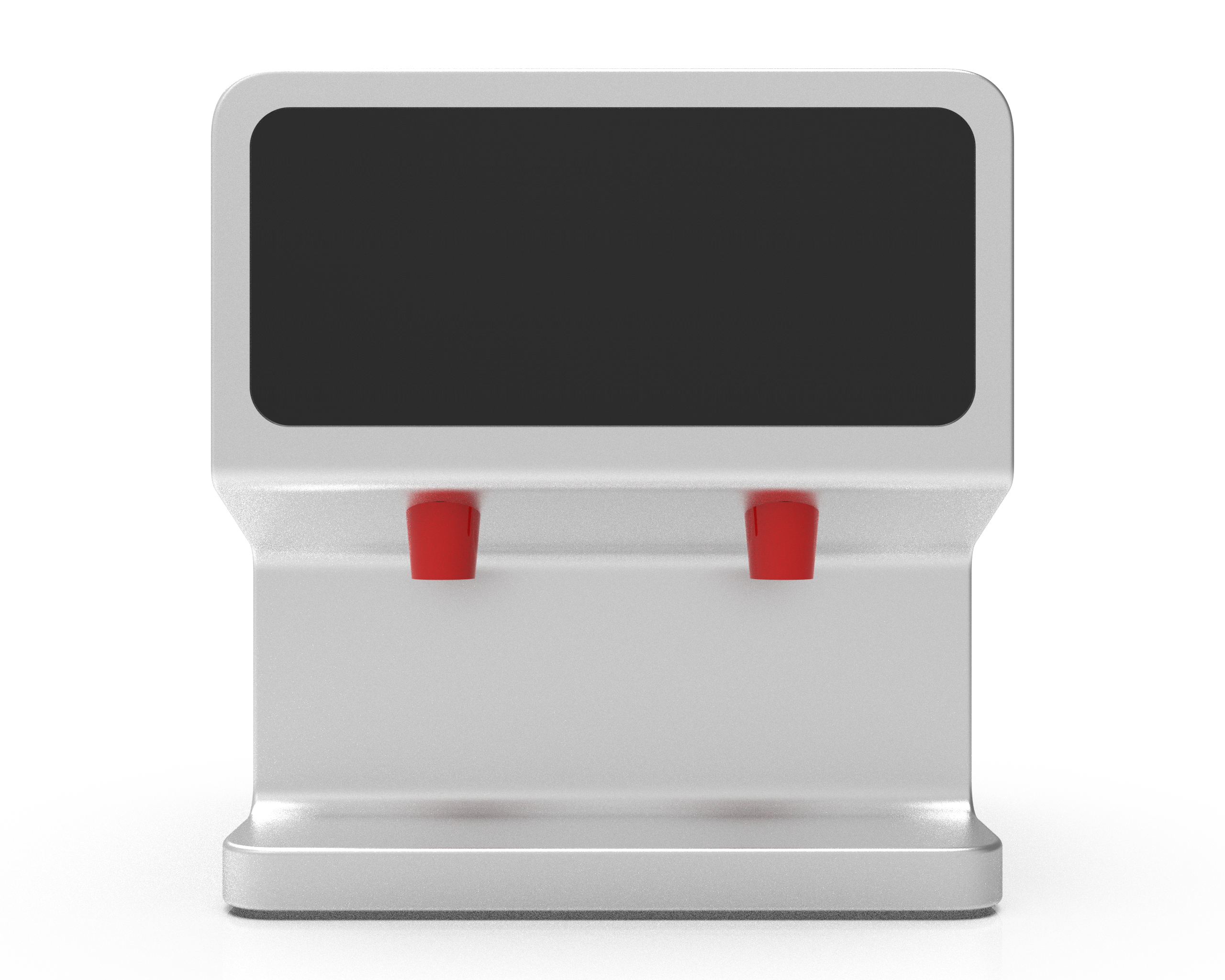
The goal was a design language that makes the device perceivable not as a technical appliance, but as an interface and experience product. Reduced form, a central touch display as visual anchor, and clear material expression define the visual framework. Controls are reduced to the essentials — more complex functions are deliberately moved into the software interface rather than being implemented as physical switches or indicators.
Smart Features & UI
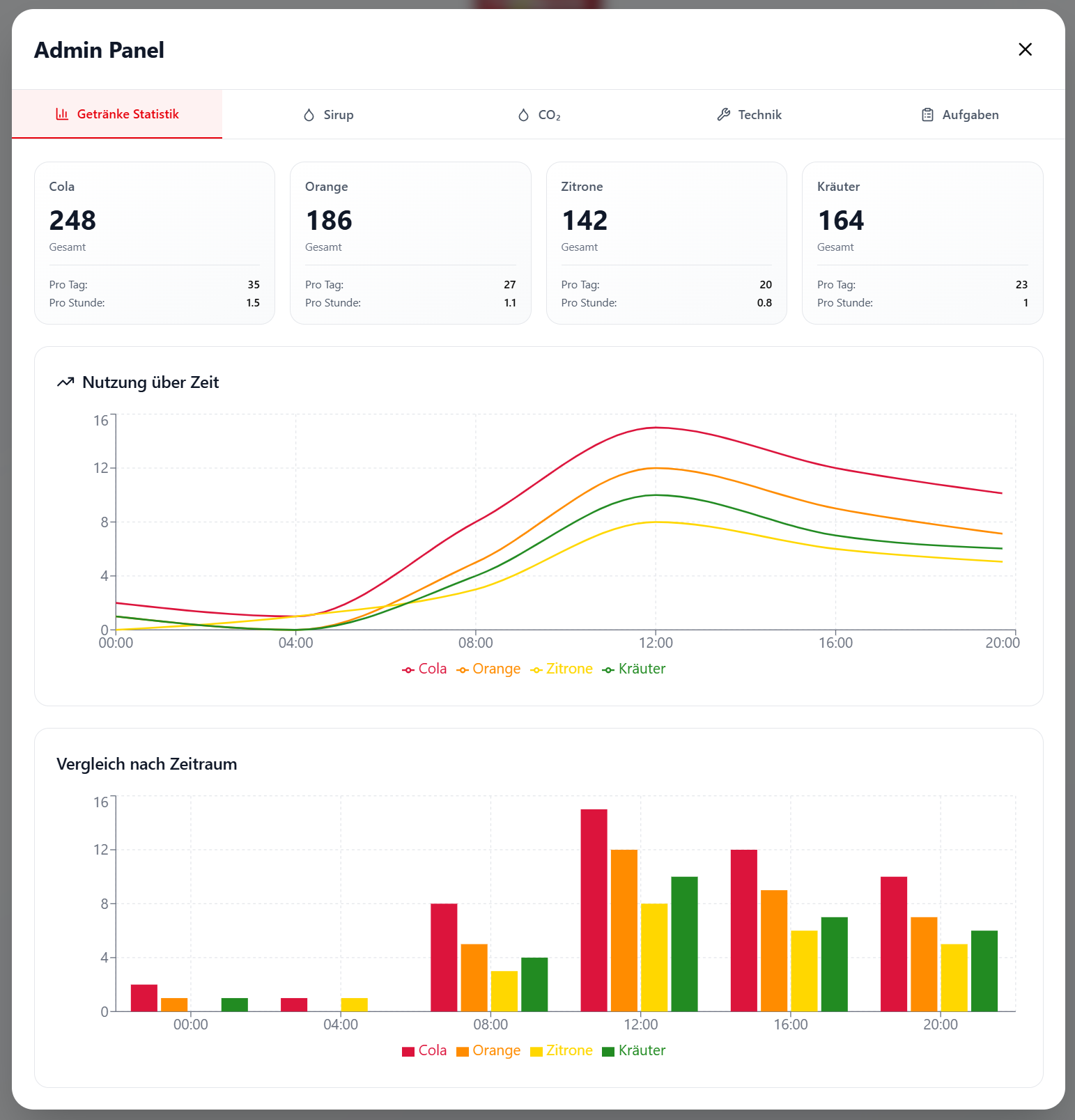
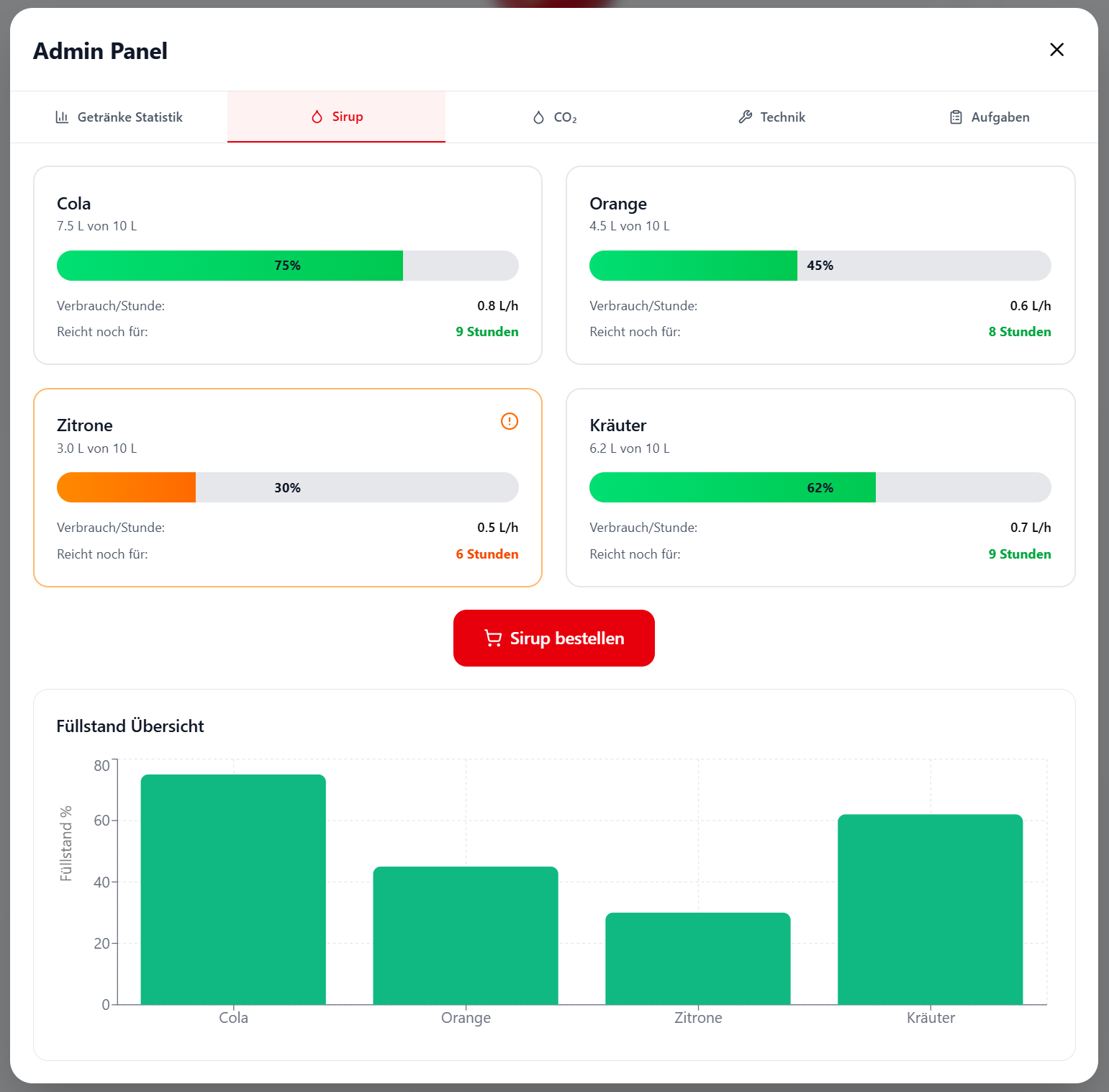
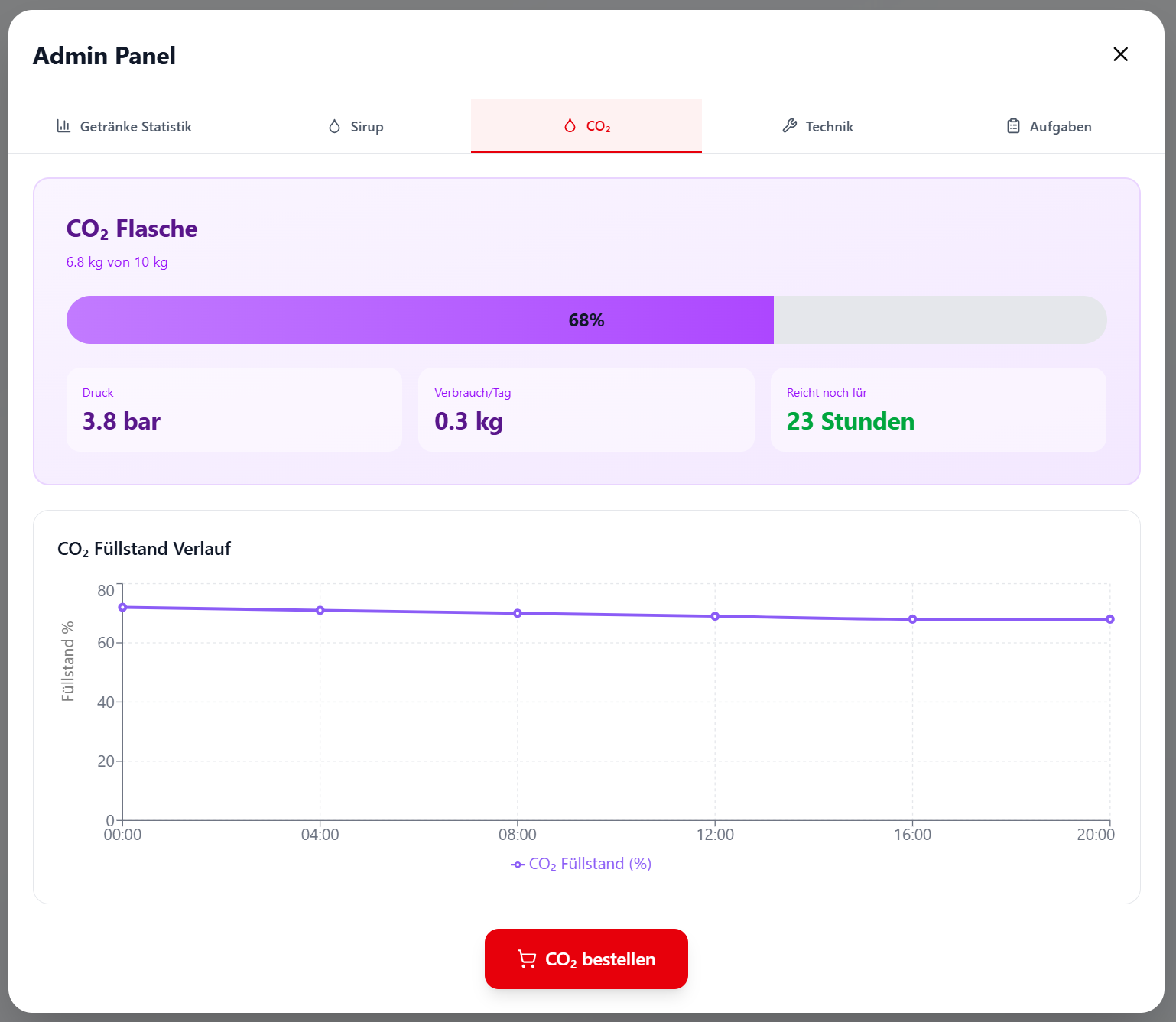
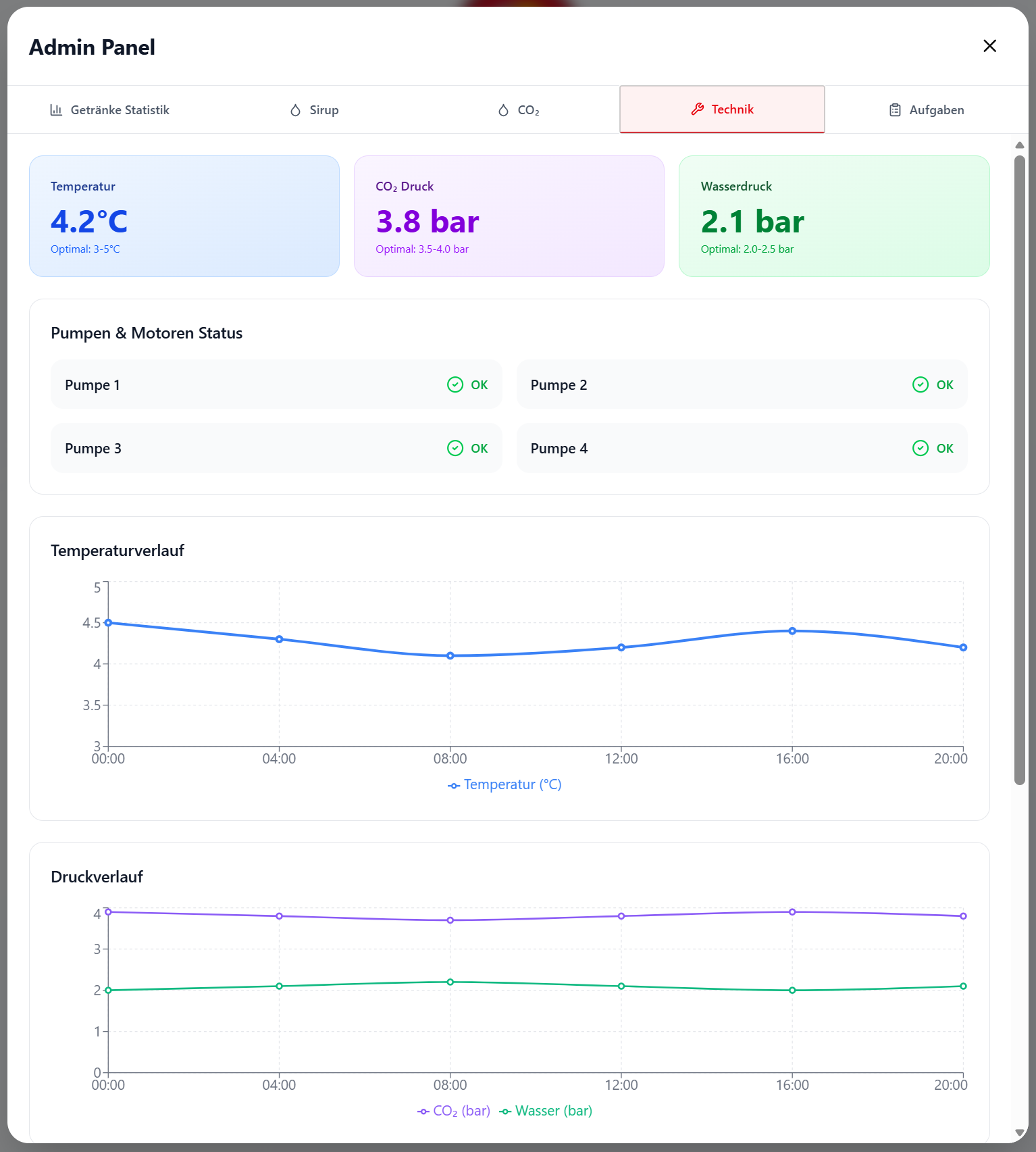
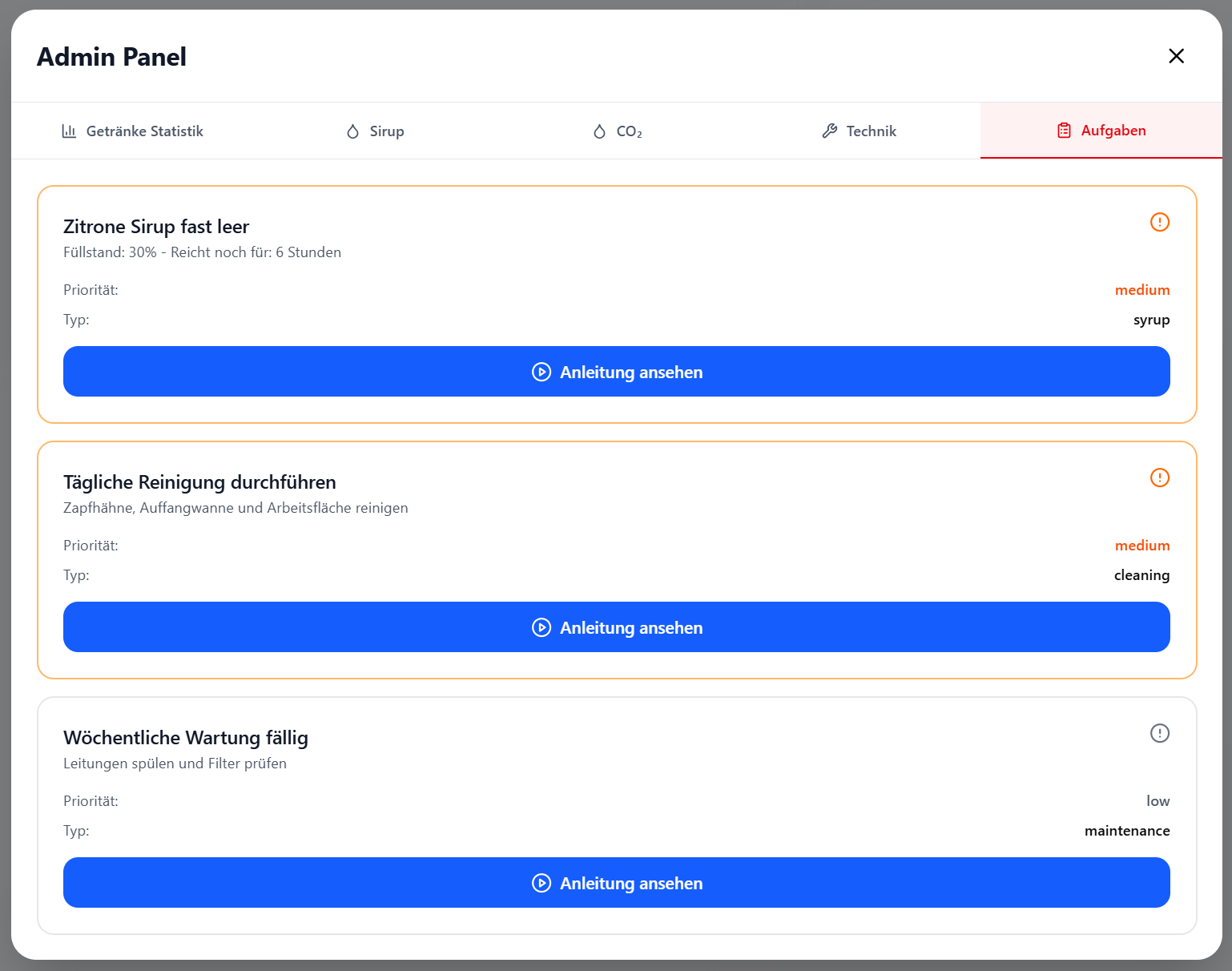
The software behind the product was conceived as an integral part, not an afterthought. It takes over what classic dispensers leave to staff: status, fill levels, maintenance alerts, and operating guidance. Complexity stays in the background — only what is relevant in the moment is visible.
Designed core functions:
- Live overview of usage and consumption
- Real-time display of status and fill levels
- Prediction of consumption and refill needs
- Guided troubleshooting directly at the device
- Monitoring and control via dashboard or app
System & Integration
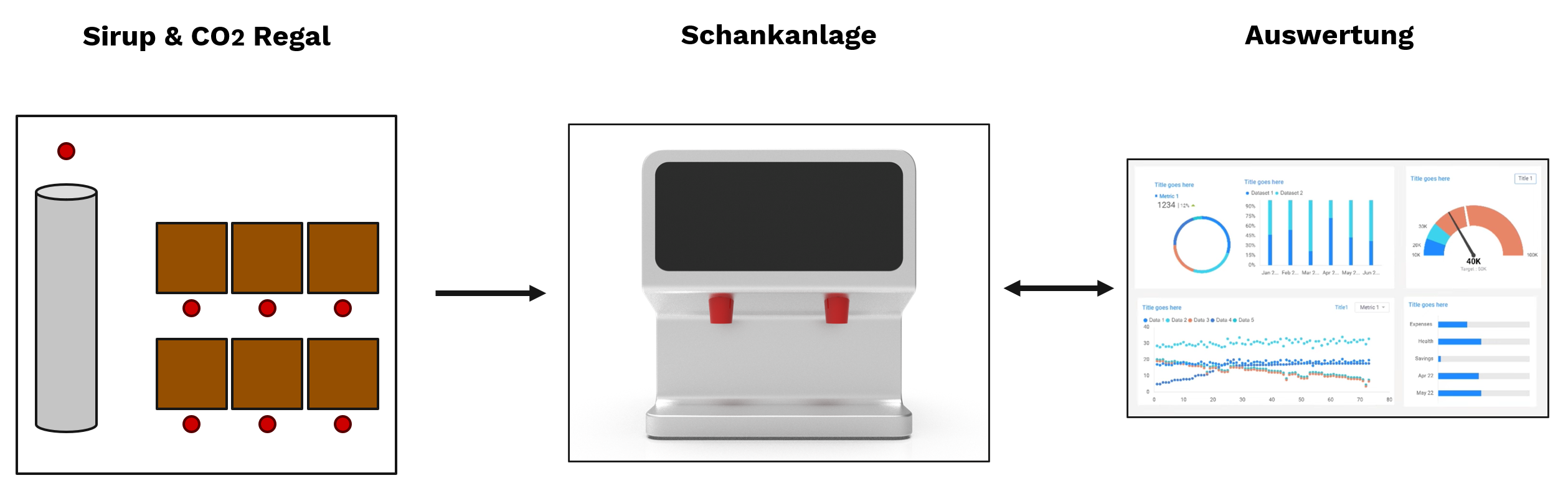
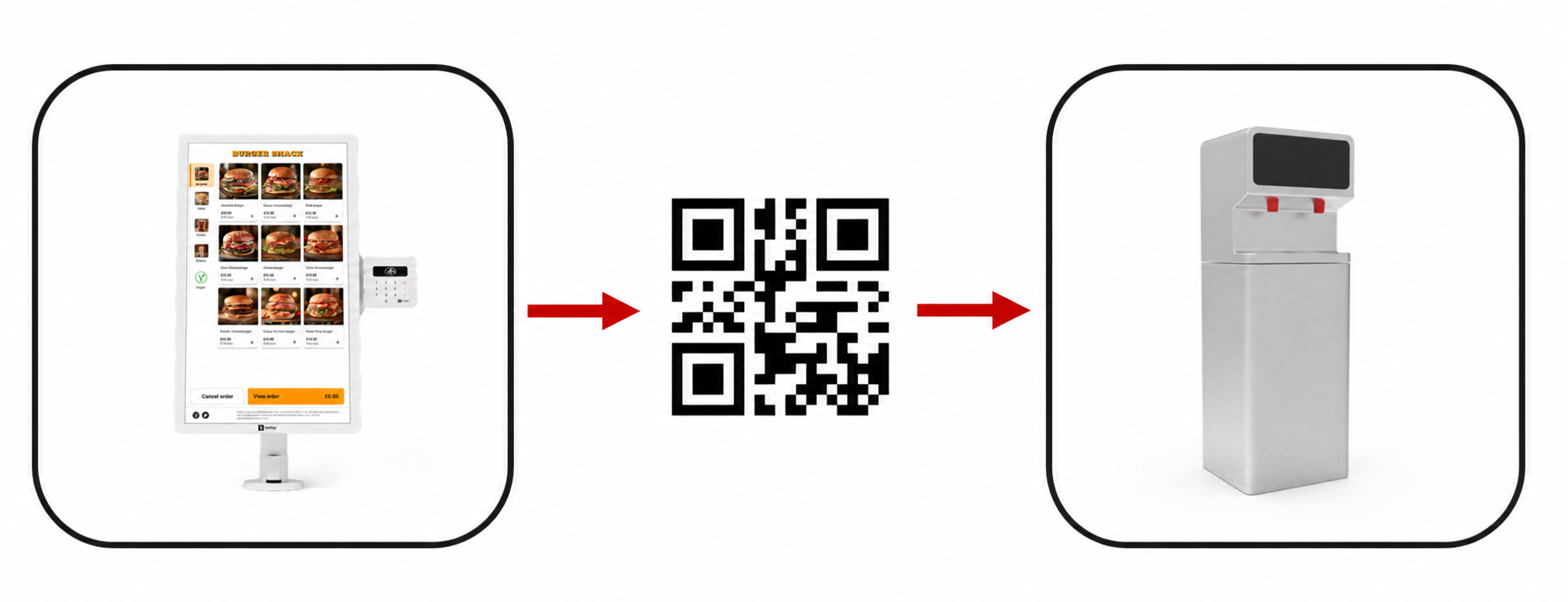
The concept is designed from the start as an open system — not an isolated standalone solution. Interfaces allow connection to POS systems, ordering processes, and digital operating workflows; QR code-based ordering enables contactless interaction at the device; remote maintenance and software updates can be implemented via the network connection. The modular architecture allows extensions without requiring changes to the core system.
Results
- Complete product concept for a new dispenser generation, pitched to the client
- Design language with clear differentiation from current market standards
- Integrated UX concept with touch interface and dashboard
- Open system architecture as foundation for connectivity and scaling
- Basis for a product development and potential series implementation planned for the coming years
Applicability to Other Projects
This approach — transforming an established product through consistent integration of industrial design, UX, and IoT into a contemporary form — can be applied to many areas of product development:
- Smart product concepts for traditional industries — devices and machines that are technically mature but aesthetically and digitally dated, and need a new concept to remain competitive.
- Hardware with its own software world — products where operation, monitoring, and service logic are integral parts of the product, not afterthoughts.
- UX concepts for technical devices — interfaces that reduce complexity rather than mapping it, with a clear separation between daily operation and detailed service functions.
- Product design with market differentiation — design languages that make a product recognizably distinct from competitors without compromising technical substance.
- Open system architectures instead of closed standalone solutions — concepts designed from the start with interfaces to existing operating systems, ordering processes, and service workflows.
If you want to rethink an existing product strategically or develop a smart product concept — let’s talk.
Similar requirements or your own idea?
I support with concept, engineering, and realization.