Postmix @Home
Concept for a compact, smart home dispenser with syrup and CO₂ cartridge system — a B2C adaptation of professional postmix technology.
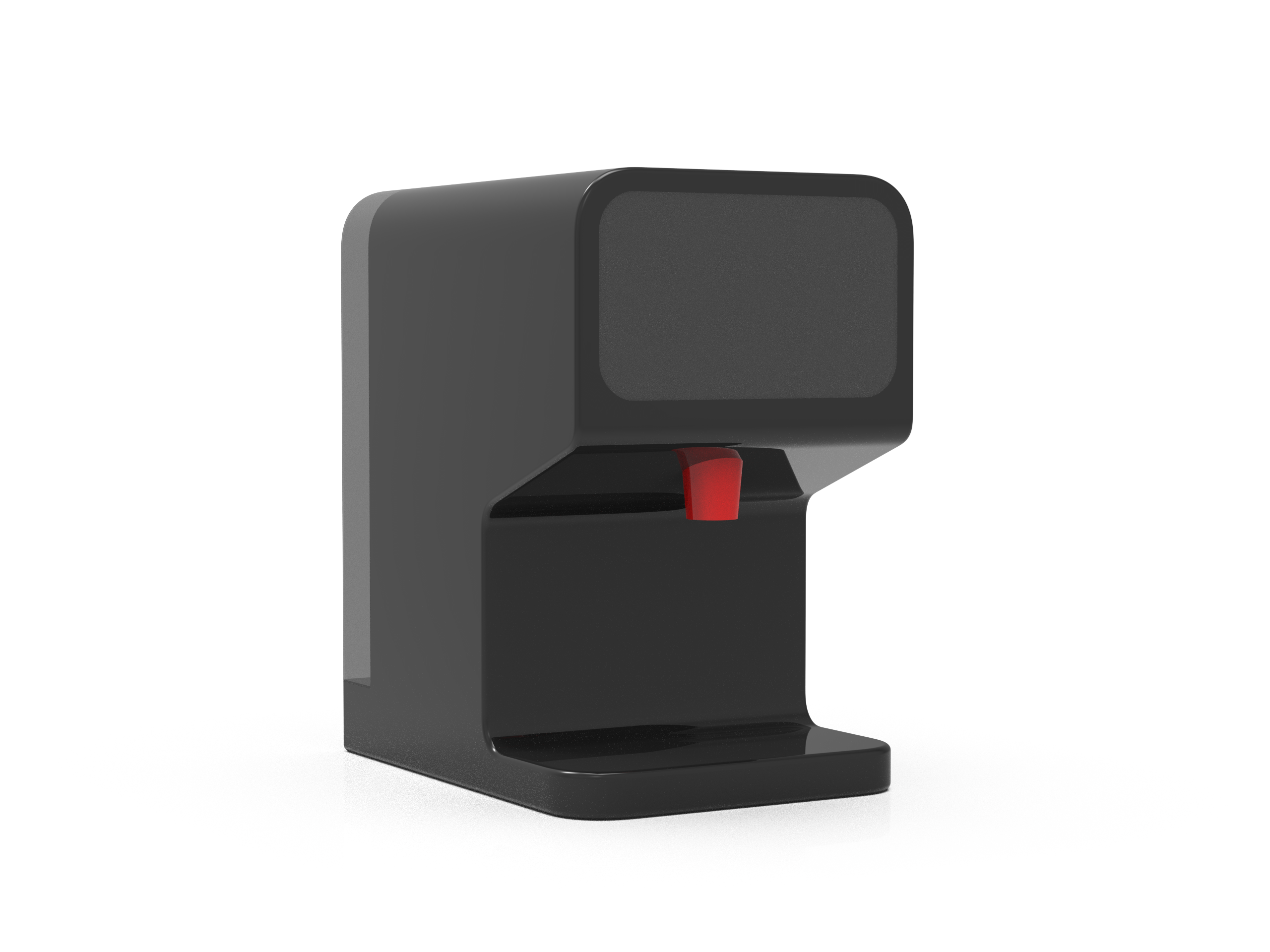
Concept and design development of a compact, smart home dispenser as a B2C adaptation of the previously developed Smart Postmix System for professional use. The concept was developed and pitched on behalf of the client, transferring postmix technology from gastronomy and events into an independent consumer product with customizable drinks, display interface, and an integrated consumable system.
Challenge: Translating professional postmix technology into an everyday-usable consumer product — including a business model that can sustain recurring use
Solution: Compact, standalone device without fixed water connection, syrup and CO₂ cartridge system, intuitive display interface with customizable drinks, coherent product and service concept
Result: B2C product concept with a distinctive design language, clear user guidance, and integrated subscription model — pitched to the client as the second pillar of the postmix product strategy
Project Info
- Services: Concept development, product design, UX/UI concept, system concept, business model
- Domain: Product development · Consumer products · Smart systems
- Industry: Consumer · Beverage · Smart devices
- Project type: Client work · Concept development · Pitch
- Predecessor project: Smart Postmix System (B2B)
Background
Beverage consumption is increasingly shifting into the private home, while few systems on the market combine customizable drinks, intuitive operation, and a premium usage experience in a home environment — most solutions are either functionally limited or not aesthetically suited for everyday home use.
I developed an independent B2C product concept that draws on the technical base of the B2B system, but is comprehensively rethought for home use in form factor, operating logic, and business model. The concept was pitched and is part of the client’s medium-term product strategy.
Concept Goals
- Making professional postmix technology accessible in a consumer format
- Compact, standalone device without a fixed water connection
- Intuitive, everyday-friendly operation via display
- Customizable drinks (flavor, intensity, carbonation)
- Home-appropriate industrial design that stands apart from technical gastronomy equipment
- Business model with recurring usage through consumables
My Role
- Translating the B2B concept into a B2C context
- Analysis of market behavior and usage scenarios in the home environment
- Product design and design language for the home setting
- UX/UI concept for display-based interaction
- System concept including cartridges, filters, and consumables
- Development of the accompanying business model
Product Design
Unlike the B2B system, which is integrated as a counter or bar solution into professional environments, the form factor here needed to work in a living space — in size, material feel, and design language. The concept envisions a compact, standalone device with clean, reduced lines and an integrated front display. It should be perceived as a modern kitchen appliance, not as an industrial dispenser — with the visual self-evidence with which a quality kettle or espresso machine stands in the kitchen today.
System Design
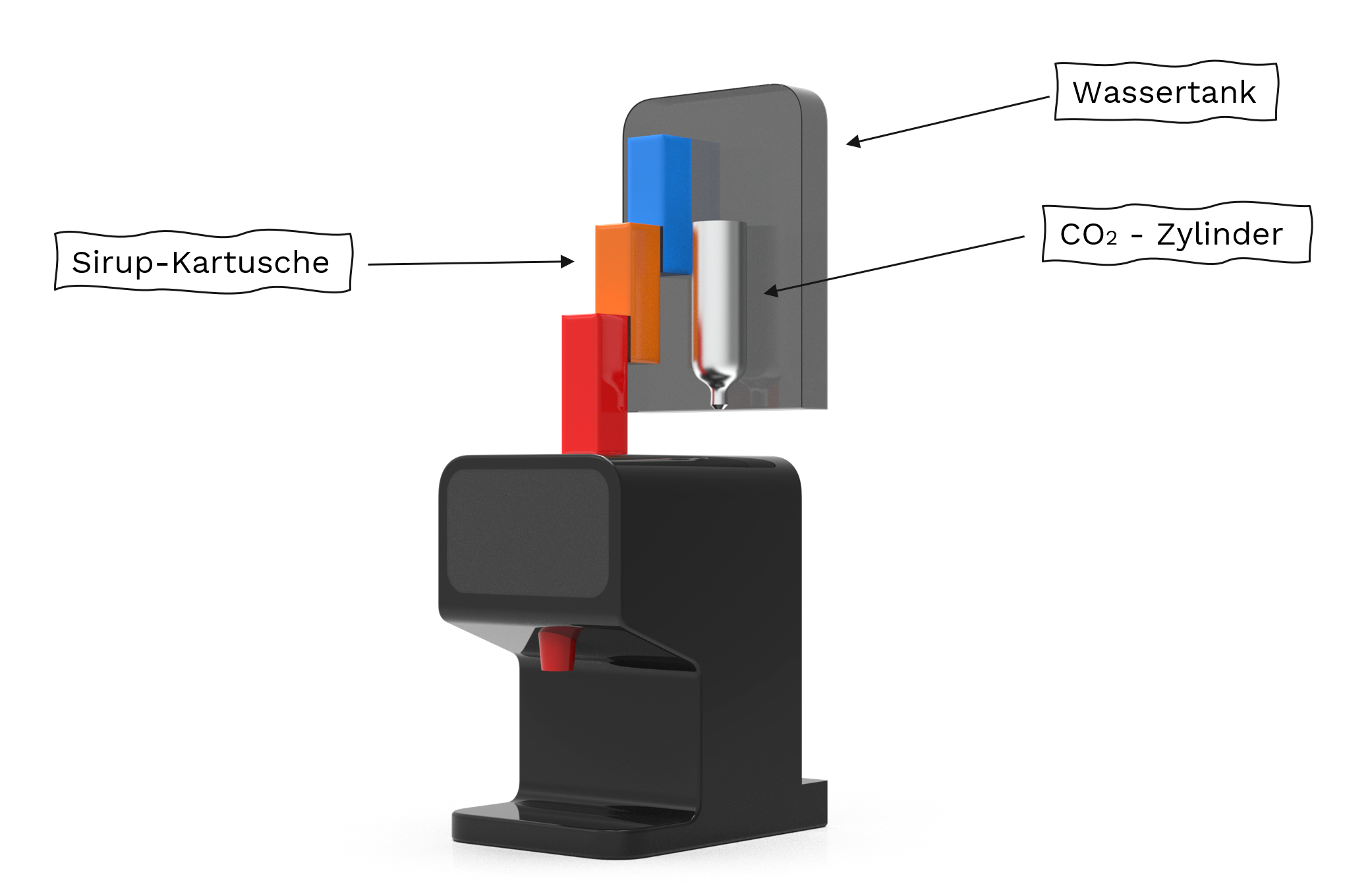
A key difference from the professional system is independence from fixed infrastructure. The concept uses an integrated water tank instead of a fixed water connection, a replaceable water filter, a CO₂ cartridge for sparkling water, and multiple syrup cartridges for drink mixing. This makes the device usable anywhere in the home and follows the logic of other successful consumer smart devices: plug-and-play instead of installation, replaceable consumables instead of complex maintenance.
User Interface
The display is the central interaction surface. Users select drinks, adjust flavor, sweetness, and carbonation individually, and receive visual feedback during preparation. The interface is designed for an intuitive, almost playful user experience that goes beyond classic drink dispensing — with the aim that first-time users can navigate it without instructions.
Business Model
Unlike the B2B system, which is primarily calculated as a one-time purchase, the home product is conceived as a system with recurring use. The device itself is the one-time investment; the consumables (syrup cartridges, CO₂ cartridges, filters) form the ongoing business. This model is well established in the consumer segment — coffee capsule systems, sparkling water makers, printers — and translates cleanly onto the postmix logic.
Results
- Independent B2C product concept as a derivative of the B2B system, pitched to the client
- Design language and form factor for the home rather than gastronomy context
- Coherent system of hardware, software, and consumables
- Subscription-capable business model as an integral part of the concept
- Part of the client’s medium-term product strategy
Applicability to Other Projects
This approach — adapting an existing professional technology for the consumer market and pairing it with a suitable business model — can be applied to many areas of product development:
- B2B-to-B2C adaptations — when a proven technology from a professional context is to be translated into a consumer variant, with all implications for form factor, operation, and pricing architecture.
- Smart consumer products with hardware-software integration — devices where the app or display experience is as important as the function itself, and both must emerge from one concept.
- Products with subscription or consumable models — concepts where the business model is not added later, but developed together with hardware and UX from the start.
- Home-appropriate industrial design — technical devices that should not look like technical devices, but like natural, self-evident parts of a modern household.
- Product strategy instead of single product — concepts that think not just about one device but about a product family across multiple market segments.
If you want to develop a consumer product from existing technology, need a smart device concept, or want to adapt a B2B solution for the end consumer market — let’s talk.
Similar requirements or your own idea?
I support with concept, engineering, and realization.